.avif)
8 Funny Email Subject Lines That Get Opens in 2026

.avif)
A revenue ops leader opens her inbox before the first meeting of the day and sees the usual stack. “Quick question.” “Following up.” “Checking in.” Forty near-identical subject lines competing for one click. The safe ones do not feel professional. They feel forgettable.
Funny email subject lines work when they create pattern interruption with control. In B2B, that means using humor to signal relevance, taste, and confidence in a crowded inbox, not trying to perform stand-up. The line gets attention because it names a frustration the buyer already knows, then frames it in a way that feels human.
That distinction matters.
A good funny subject line earns the open because the joke is attached to a real business problem. A bad one gets a brief smirk and no reply, or worse, makes the sender look careless. The trade-off is simple. More personality can raise curiosity, but it also raises the risk of sounding off-brand, flippant, or vague if the message underneath is weak.
For data-focused companies, that trade-off is even sharper. Teams dealing with bounced emails, stale CRM records, duplicate contacts, and shaky personalization do not need random cleverness. They respond to humor that reflects operational pain with precision. That is why the strongest subject lines in this category are built around specific psychological triggers: self-awareness, surprise, tension, recognition, and mild social pressure.
Humor also does not rescue poor email fundamentals. If domain setup is sloppy or list quality is weak, a clever subject line just gets a bad email opened less often. Strong inbox placement still starts with the basics, including these email deliverability best practices.
This playbook treats funny subject lines as a strategic tool for B2B teams, especially companies like Icypeas that sell into data-conscious buyers. The goal is not to collect jokes. It is to choose the right kind of humor for the audience, weigh the risk against the reward, and turn a subject line into the first proof that the sender understands the problem.
Table of Contents
1. The Self-Deprecating Data Quality Joke
A rep pulls a “high-intent” list, launches the sequence, and then spends the afternoon watching bounce alerts stack up. That is the moment this subject line style is built for. Self-deprecating humor works best when the buyer already feels the pain and wants someone to say the quiet part out loud.
For B2B data companies, this is usually the safest kind of funny. The target is the broken workflow, the messy CRM, or the category's bad habits. The buyer stays out of the blast radius. That matters. Humor gets replies only when it creates recognition without creating friction.

Laugh at the problem your buyer already hates
Use this type when your prospect deals with stale records, bounced emails, duplicate contacts, or manual verification work. The joke should signal, “yes, this process is absurd,” and then earn the open by tying that absurdity to a fix.
Examples:
- Manual-process jab: That “verify email” workflow deserves a retirement plan
- Bounce joke: Your bounce problem called. It wants less attention
- Dirty CRM angle: We found bad emails hiding in your CRM again
Each one maps to a specific psychological trigger. Recognition. Relief. Curiosity. The reader sees a problem they already know, feels slightly less alone in it, and opens to see whether the sender can help.
Practical rule: If the joke needs explaining, it is not ready.
This style has a clear risk and reward profile. Reward: it humanizes a technical problem and makes a cold email feel less manufactured. Risk: if the line sounds too cute, serious buyers will read it as fluff. The fix is simple. Keep the humor in the subject line, then make the first sentence operational and concrete.
For example, if the subject jokes about bad emails in the CRM, the body should immediately address bounce reduction, list hygiene, or domain protection. Teams that already follow a strict email deliverability best practices framework should be even stricter here, because funny subject lines still need to protect sender reputation and message clarity.
I also would not use this format on every send. It works better as a changeup than a default. A practical cadence and testing structure matters more than the joke itself. If your team needs the mechanics, use this guide on how to write the best cold email to pair the subject line with a body that closes the loop.
The standard for this category is simple. Make fun of the mess. Do not make fun of the buyer.
2. The Rhetorical Question That Demands Attention
A prospect scans their inbox between meetings, sees a question in the subject line, and instinctively starts answering it. That micro-commitment is why this format works. The right question creates tension before the email is even opened.
For B2B teams, the goal is not to sound witty. The goal is to surface an uncomfortable gap in a way that feels sharp, relevant, and slightly disarming. This category works best when the humor comes from professional self-recognition. The buyer sees the question and thinks, yes, that is annoyingly close to home.
Use the question to trigger self-diagnosis
A strong rhetorical subject line pushes on one of three triggers:
- Uncertainty: How many bad emails are sitting in your CRM?
- Competitive anxiety: Ever wonder why your competitors know more about your buyers?
- Professional pride: Are your reps prospecting, or just guessing with confidence?
This is a high-reward format because it earns attention without sounding like a generic promotion. It also carries more risk than it looks. Push too hard and the line feels accusatory. Stay too broad and it reads like lazy copy.
The fix is specificity.
Good rhetorical questions point to an operational problem the buyer can verify. For a company like Icypeas, that usually means stale contact data, weak enrichment, duplicate records, or low-confidence prospecting inputs. Those are serious issues, but the question format lets you approach them with a lighter touch.
The body has to close the loop fast. If the subject asks whether reps are guessing, the first sentence should explain what data is missing, how that affects targeting, and what changes when the inputs improve. Teams that want a tighter structure can pair this with a proven cold email framework that turns curiosity into replies.
One more practical rule. Use rhetorical questions when the buyer likely knows the problem exists but has not prioritized fixing it. Do not use them when the issue is highly sensitive, politically loaded, or likely to make the reader feel exposed in front of peers.
Smart questions get opens because they create pressure. Funny ones work when that pressure still feels useful.
3. The Absurdist Exaggeration
Absurdity is useful when your market is numb to ordinary claims. Everyone says they save time. Everyone says they improve outreach. Few people say your email list has become sentient.
That kind of exaggeration can work because it dramatizes a problem the buyer already recognizes. The trick is to exaggerate the pain, not the product promise.

Push the pain point past reality, then bring it back to value
Good examples:
- Spreadsheet chaos: We stopped a spreadsheet from claiming another SDR
- Bounce drama: Your email list is developing opinions
- Ghosting joke: Several of your contacts have entered witness protection
These work best when the email body gets serious fast. Open with the operational issue behind the joke: outdated contacts, invalid emails, duplicated records, or weak enrichment. The contrast between funny subject line and practical email body creates trust because the humor got attention, but the message still respects the buyer's time.
Keep these constraints in mind:
- Stay buyer-adjacent: Joke about the mess, not the prospect's intelligence.
- Use believable pain: Manual cleansing, duplicate records, and stale data are relatable. Wild randomness isn't.
- Anchor fast: The first sentence should explain the underlying problem the joke points to.
I like absurd exaggeration most when a market is saturated with sterile copy. It's less useful when your recipient expects high-formality communication, such as legal, finance, or procurement leaders early in the relationship.
4. The Unexpected Pop Culture Reference
A rep sends “Game of Bounces” to a RevOps leader who spends half the week cleaning routing rules and fixing bad records. That can work. Send the same line to a procurement executive in a conservative industry, and it reads like the sender is trying too hard.
That trade-off is the whole game with pop culture references. In B2B, humor has to earn its place. The reference should create instant pattern recognition, then point the reader toward a real operational issue.
Use recognition as a shortcut
The best pop culture subject lines trigger familiarity. They save words because the buyer already knows the frame. That makes this style useful for data-focused teams selling list hygiene, verification, enrichment, or outbound infrastructure. You are not just making a joke. You are borrowing a mental model the reader can process in a second.
Examples that fit data and outbound use cases:
- Game of Bounces
- Your contact list. The origin story nobody asked for
- Looking for bad emails in all the wrong places
Each one relies on a different trigger. “Game of Bounces” uses recognition and category tension. “The origin story nobody asked for” uses mild ridicule aimed at the problem, not the buyer. “Looking for bad emails in all the wrong places” works because the reader can infer the operational issue fast.
That is the standard. If the reference needs explanation, cut it.
For companies like Icypeas, this format works best when the email body immediately translates the joke into a data problem. Bad verification logic. Stale enrichment. Duplicate records. Catchall-heavy lists that look fine until campaigns underperform. The subject line gets the open. The first sentence has to prove there is substance behind it.
A simple risk and reward filter helps:
- High reward, low risk: widely recognized references tied to a clear pain point
- High reward, high risk: niche references sent to a tightly defined audience that will likely get them
- Low reward, high risk: obscure fandom jokes, forced puns, or references that have no connection to the offer
Audience fit matters more here than with any other humor type. SaaS operators, RevOps leaders, and growth teams often tolerate a sharper reference because they live in internet culture and inbox fatigue is real. Broader enterprise audiences usually need cleaner, more universal language.
Keep the line short. As noted earlier, shorter subject lines tend to be easier to scan on mobile and easier to understand on first read.
Ask one question before sending it. Does this reference make the pain clearer, or does it only make the sender look clever?
Use these templates:
- [Pop culture title], but for [data problem]
- Your [database/list/process]. [famous trope or subtitle]
- Searching for [bad record type] in all the wrong places
- [Known character or franchise] would not approve of this bounce rate
I use this category sparingly. When it matches the audience, it feels fresh and specific. When it misses, it lowers perceived credibility fast.
5. The False Premise Switcher
This is one of the most effective funny email subject lines for skeptical buyers because it creates tension without requiring a big joke. You state something that sounds wrong, then let the contradiction pull the open.
Examples:
- Contrarian setup: We recommend not using your current email verification
- Reverse praise: Your lead database is impressive, for all the wrong reasons
- Operational flip: Bounce rates are useful, if you enjoy finding problems too late
Start wrong on purpose, then earn the turn
The danger here is obvious. If the switch feels like cheap clickbait, trust drops immediately. The line has to point to a real insight.
This format works best when you have a contrary point to make. Maybe teams rely on weak verification logic. Maybe they use catchall-heavy data and only discover the issue after campaigns underperform. Maybe they believe more records always mean better prospecting, when the actual issue is validity and freshness.
The body copy should resolve the contradiction in the first paragraph. If you say “We recommend not using your current email verification,” explain whether the issue is poor validation, bad catchall handling, or a process that creates false confidence. Don't save the answer for the CTA.
I use this structure when the buyer already thinks they've solved the problem. Humor alone won't crack that. A false premise can.
6. The Specific, Absurd Number Reference
A rep opens Salesforce before a pipeline review and finds 17 versions of the same account, 4 contacts with no company name, and one lead somehow assigned to a territory that no longer exists. That is the right setup for this subject line style.
Specific absurdity works because it borrows the visual language of analysis. Numbers signal pattern recognition. The absurd detail keeps the line from reading like another dry ops alert. For data-focused buyers, that combination can earn attention fast.
The rule is simple. Use a number to frame a real problem, then make the weird part obviously playful. Do not slip into fake precision. If the subject line says 3 duplicates, the email should explain what those records are, how you found them, and why they matter.
Specific numbers make the joke feel intentional
Good hooks usually follow one of three paths:
- Odd count plus clear problem: We found 7 duplicate contacts and 1 identity crisis
- Precise timing plus operational pain: Your list quality drops at 2:14 p.m.
- Analyst-style setup plus absurd twist: Audit complete. 11 records need supervision
This format works well for companies like Icypeas because the humor sits on top of a real operational issue. Duplicates waste rep time. Stale records hurt deliverability. Weak verification creates false confidence in reporting. If your team already has a disciplined process for email list management practices, this type of subject line can point to the cost of skipping one step.
I use this style when the buyer respects detail and ignores generic claims. A vague joke feels disposable. An oddly precise one feels observed.
A simple template:
- Number
- Data problem
- Human or operational twist
Example: “3 duplicate records are wasting rep time” is clean but forgettable. “3 duplicate records started a committee” keeps the same core issue, but gives the reader a reason to open without hiding the point.
7. The Guilt-Tripping Humor
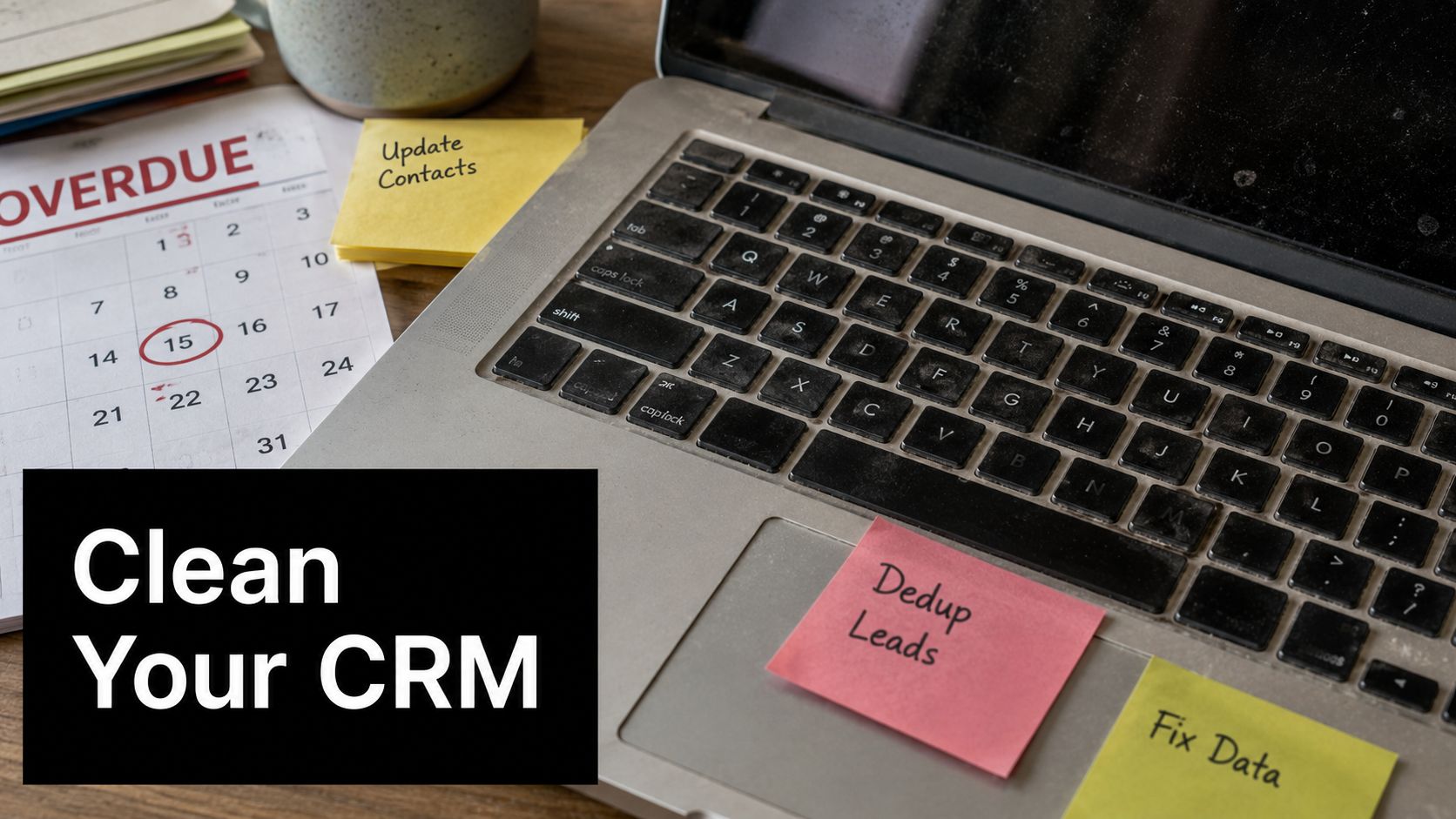
Mild guilt works because it names the maintenance work everyone delays. CRM cleanup. Reverification. Deduplication. Contact enrichment. Nobody wakes up excited to do any of it.
The right subject line turns that neglect into a shared joke instead of a lecture.
Use gentle shame, not accusation
Try lines like:
- Soft callout: Your email list hasn't had a checkup in a while
- Neglected-process joke: We're all pretending that CRM cleanup can wait
- Parenthetical softener: When did you last verify your contacts? (No judgment. Some judgment.)
This style can be effective, but it needs restraint in cold outreach. Ongage notes an underserved issue in existing guidance: adapting funny subject lines for B2B outreach without harming credibility. Their summary includes a future-dated 2026 cold email study showing humorous lines can raise opens by 12%, but also increase bounce rates by 8% if recipients see the tone as unprofessional. The same summary notes self-deprecating humor produced 15% higher engagement than observational humor in sales emails in that study (Ongage's discussion of humor risks in B2B cold email).
That doesn't mean avoid guilt-based humor. It means use it where the buyer can feel the joke is collaborative. “We're not judging” works better than “You've been ignoring this.” The first creates rapport. The second creates resistance.
The buyer should feel seen, not scolded.
8. The Literal Misinterpretation Play
A prospect scans your subject line between forecast meetings and pipeline reviews. If the joke asks them to decode too much, you lose. If the joke reframes a familiar phrase in one beat, you get the open.
That is why this pattern works so well in B2B. It takes stiff category language and gives it a small twist without hiding the offer. For data companies, that matters. Buyers already know terms like contact enrichment, lead quality, and email verification. The humor comes from treating those phrases as plain English instead of software jargon.
Turn category language into a clean, low-friction joke
Examples:
- Enrichment joke: We enrich contacts. No fertilizer required
- Verification joke: Your emails asked us to confirm they exist
- Lead quality riff: Your leads aren't hot. They're just unverified
The psychological trigger here is recognition. The buyer sees a phrase they use every week, then catches the alternate meaning half a second later. That small pattern break creates a smile without forcing a big comedic swing.
It is a smart play for dry categories because the reward is solid and the risk is manageable. Self-deprecating humor makes your brand feel human. Guilt-based humor can create solidarity. This approach does something different. It keeps the joke attached to the product itself, which makes it useful for cold outreach to technical or operations-heavy audiences.
For a company like Icypeas, this style fits best when the subject line maps to a concrete data workflow. “We enrich contacts. No fertilizer required” works because the buyer immediately understands what the product does. “Your emails asked us to confirm they exist” works because verification is already part of the team's day-to-day language.
Personalization still matters here, as noted earlier. A phrase-level joke gets stronger when it points at a real workflow, trigger, or data problem the recipient owns. Pair the subject with preview text that removes any doubt about the offer. If the subject is “We enrich contacts. No fertilizer required,” the preview text can say, “Find and verify work emails without manual research.”
Use this format when you want humor with tight message control. Skip it if the phrase needs too much setup or the alternate meaning feels forced. The best version is fast, clear, and closely tied to the operational pain your buyer is already dealing with.
8-Point Comparison: Funny Email Subject Line Types
| Subject Line Style | Implementation Complexity 🔄 | Resource Requirements ⚡ | Expected Outcomes 📊⭐ | Ideal Use Cases 💡 | Key Advantages ⭐ |
|---|---|---|---|---|---|
| The Self-Deprecating Data Quality Joke | Medium, needs careful tone calibration | Low–Medium, copywriting, A/B testing, simple design | Higher open rates and rapport; modest engagement lift | Outreach to SDRs, sales & marketing teams; warm lists | Builds rapport, humanizes brand, differentiates from generic copy |
| The Rhetorical Question That Demands Attention | Low, craft a precise, compelling question | Low, copywriting and split testing | Consistently high opens; drives curiosity and deeper reads | Cold prospecting to RevOps/decision-makers | Triggers mental engagement; positions brand as insight-driven |
| The Absurdist Exaggeration | Medium–High, comedic risk; needs skilled execution | Medium, creative copy, testing, possible visual assets | Highly memorable and shareable; strong inbox standout | Viral/standout campaigns; growth teams and informal audiences | High memorability; reduces defensiveness when critiquing processes |
| The Unexpected Pop Culture Reference | Medium, must be timely and persona-relevant | Low–Medium, persona research, timely content checks | Emotional resonance and recall; variable by audience | Younger SDR/AEs, culturally tuned segments, social sharing | Instant recognition; creates emotional connection and shareability |
| The False Premise Switcher | High, risk of perceived deception; needs strong follow-up | Medium–High, strategy, testing, persuasive email content | Exceptional engagement when justified; reframes prospect thinking | Thought leadership, contrarian campaigns, educational outreach | Creates "aha" moments; effectively challenges status quo beliefs |
| The Specific, Absurd Number Reference | Medium, requires accurate data and clear explanation | Medium, analytics support, precise copy, validation | Appeals to data-driven audiences; memorable metric-based lift | RevOps, analytics-focused prospects, case study teasers | Combines credibility with humor; memorable, measurement-friendly claims |
| The Guilt-Tripping Humor | Medium, tone-sensitive; best with warm context | Low–Medium, segmentation, empathetic copy | High engagement and replies from targeted prospects | Re‑engagement, nurture flows, teams known to neglect data tasks | Strong motivator for action; creates relatable self-recognition |
| The Literal Misinterpretation Play | Medium, needs clever wordplay and clear cues | Low, creative copy and preview text for context | Unexpected, amusing; memorable but may need clarification | Audiences familiar with industry jargon or internal comms | Highly original; highlights jargon absurdity and sparks conversation |
From Funny to Pipeline Putting Humor to Work
A rep sends a clever subject line on Monday, gets a spike in opens, and calls it a win. By Friday, replies are flat, meetings have not moved, and half the list should never have been mailed in the first place. That is the gap between funny and useful.
Humor in B2B email works as a strategic device, not a creative flourish. It earns a split second of attention, lowers resistance, and signals that a real person wrote the message. But attention is only the first job. Pipeline comes from the full chain: the right account, the right contact, the right problem, a subject line that fits the buyer's context, and body copy that pays off the promise.
That is why the eight subject-line types above matter. Each one uses a different psychological trigger. Self-deprecation builds trust. Rhetorical questions create an open loop. Absurd exaggeration creates surprise. Pop culture creates recognition. False-premise switchers create curiosity. Specific absurd numbers give analytical buyers something concrete to grab onto. Guilt-tripping humor drives action through self-recognition. Literal misinterpretation makes jargon feel fresh again. The smart move is not to use all of them. The smart move is to match the trigger to the audience and the stage of the conversation.
There is a real risk-reward calculation here.
A safe joke usually gets mild lift and little downside. A sharper joke can produce far more replies, but it can also hurt trust if the setup feels forced, the buyer misses the reference, or the email body shifts into generic sales copy. In practice, data-focused companies should bias toward humor that clarifies a business problem. Dirty CRM jokes, stale-record jokes, bounced-email jokes, and manual-enrichment jokes tend to work because the buyer already lives with that pain. Random wordplay usually burns attention without adding meaning.
I use a simple filter. If the subject line makes the problem sharper, keep testing it. If it only advertises that the sender is witty, cut it.
For teams like Icypeas, humor becomes operational. Clean data makes funny subject lines safer and more effective because relevance does the heavy lifting. A line about bad emails hits differently when the recipient genuinely owns RevOps, demand gen, or outbound infrastructure. A joke about data decay lands better when the company is hiring SDRs, changing territories, or expanding into a new market. Good enrichment gives the humor context. Verification protects deliverability. Targeting keeps the joke from sounding careless.
Use a controlled process:
Test one humorous subject line against one plainspoken control. Send both to the same type of buyer. Measure opens, replies, positive replies, unsubscribes, and booked meetings. Then check whether the humor attracted the right conversations or just cheap curiosity.
That last part matters. Open rate can reward novelty. Pipeline rewards fit.
If a humorous subject line raises opens but lowers reply quality, it failed. If it gets replies from the right personas and the body copy converts that attention into meetings, keep it and build a small library by audience, trigger, and risk level. That turns humor from a one-off copy trick into a repeatable outbound asset.
If you want funny email subject lines to land in the right inboxes, start with better data. Icypeas helps sales, marketing, and product teams find, verify, and enrich professional contact data at scale, with tools like Email Finder, Email Verifier, Reverse Email Lookup, and a massive B2B lead database. Clean data makes humor safer, personalization sharper, and outreach far more likely to turn into replies.






















.png)



.webp)