.avif)
Mastering Smile and Dial for Sales Success in 2026

.avif)
If Smile and Dial still works, why do so many teams keep talking about attitude while ignoring whether the call even reaches a human?
That's the core gap. Classic advice says prospects can hear confidence in your voice, and they probably can. But a good tone doesn't fix bad targeting, weak list hygiene, spam labeling, or a calling motion aimed at deals that need broader consensus. In modern outbound, the smile still matters. It just matters later in the chain.
A practical view of Smile and Dial in 2026 starts with infrastructure. You need accurate contact data, the right person in the account, clean dialing practices, and a system that supports coordinated outreach across phone, email, and follow-up. If your team wants a broader communications setup around calling, messaging, and collaboration, resources like Hosted Telecommunications' UC solutions are useful context because the phone no longer sits alone in the outbound stack.
Table of Contents
- Start with segments, not slogans
- Build a cadence that earns context
- Use scripts as guardrails, not handcuffs
- Measure conversations, not just effort
- Bad lists break good reps
- Enrichment turns calls into relevant outreach
- Verification protects the motion
What Does Smile and Dial Mean in 2026
Smile and Dial used to mean something simple. Pick up the phone, keep your energy up, sound positive, and work through volume. The underlying belief was that a prospect could hear your mindset. In many cases, that part is still true. People do respond to tone, pace, and confidence.
But the phrase needs an update.
Today, Smile and Dial is less about emotional self-coaching and more about operational discipline. The smile is professionalism. It's preparation, calm delivery, and the ability to sound sharp on call number one and call number fifty. The dial is no longer just manual activity. It's a decision about who to call, when to call, how to support the call with other channels, and whether your data is strong enough to justify the effort.

The old phrase still matters, but for a different reason
A rep who sounds flat, rushed, or irritated will still lose calls they should have won. That hasn't changed. What has changed is where the tactic breaks first. It usually doesn't fail because the rep forgot to smile. It fails because the list is wrong, the number is stale, the contact has no buying influence, or the outreach arrives with no context.
Practical rule: If your team treats Smile and Dial as a mood hack instead of a go-to-market system, they'll confuse effort with execution.
The modern version of this tactic works when sales leaders stop asking, “Are reps bringing enough energy?” and start asking better questions. Are we calling the right segment? Are we reaching people who are able to move a deal forward? Are we using phone as part of a coordinated motion, or as a substitute for strategy?
The Evolution from Boiler Room to Boardroom
The original Smile and Dial environment rewarded persistence. Reps worked from broad lists, called through switchboards, and dealt with buyers who often had less access to information than they do now. In that world, raw activity could create opportunities because the process around buying was simpler and the phone carried more weight on its own.
That older model also fit a narrower kind of deal. One buyer, one need, one conversation, one next step. It wasn't elegant, but it was straightforward.
Why the old model worked then
The classic high-volume floor had a few structural advantages:
- Less channel competition: Prospects weren't juggling the same density of outreach across email, social, chat, and automated sequences.
- Lower expectation of personalization: A rep could open with a broad pitch and still get a fair hearing.
- Simpler buying paths: Fewer people needed to weigh in before a deal moved.
That last point is where many teams get caught using old tactics in the wrong environment. A typical B2B purchase now involves 6 to 10 decision-makers, and buyers spend only about 17% of their time meeting with potential suppliers, according to this B2B buying analysis. That changes the job of outbound completely.
What changed in modern outbound
You're not just trying to get someone on the phone. You're trying to enter a buying process that may already include operations, finance, IT, procurement, and an executive sponsor. A lively opener won't solve that by itself.
Here's the practical contrast:
| Then | Now |
|---|---|
| Broad lists could still produce meetings | Narrow targeting matters more than brute volume |
| One contact could often move the deal | Multiple stakeholders shape the decision |
| A phone call could stand on its own | Calls work better when paired with other touches |
| Activity was the main lever | Data quality and account selection are the main levers |
A cheerful call style can help once someone answers. It can't replace account strategy when buying decisions are distributed across a committee.
What boardroom selling demands
Modern outbound has to respect deal complexity. That means a rep can't just “hit the phones” and hope the right person shows up. They need to know which role they're reaching, what problem that role is likely to care about, and how the conversation fits into a larger account plan.
This is why Smile and Dial survives in some segments and stalls in others. In straightforward, high-velocity sales, the phone can still create fast momentum. In enterprise or committee-based sales, it only works when the call is one coordinated touch inside a broader motion.
The Unfiltered Pros and Cons of High-Volume Outreach
High-volume outreach still has a place. I'd never tell a team to abandon the phone just because outbound got harder. But I also wouldn't let anyone pretend the old formula works untouched. The strengths are real. So are the costs.
Where high volume still wins
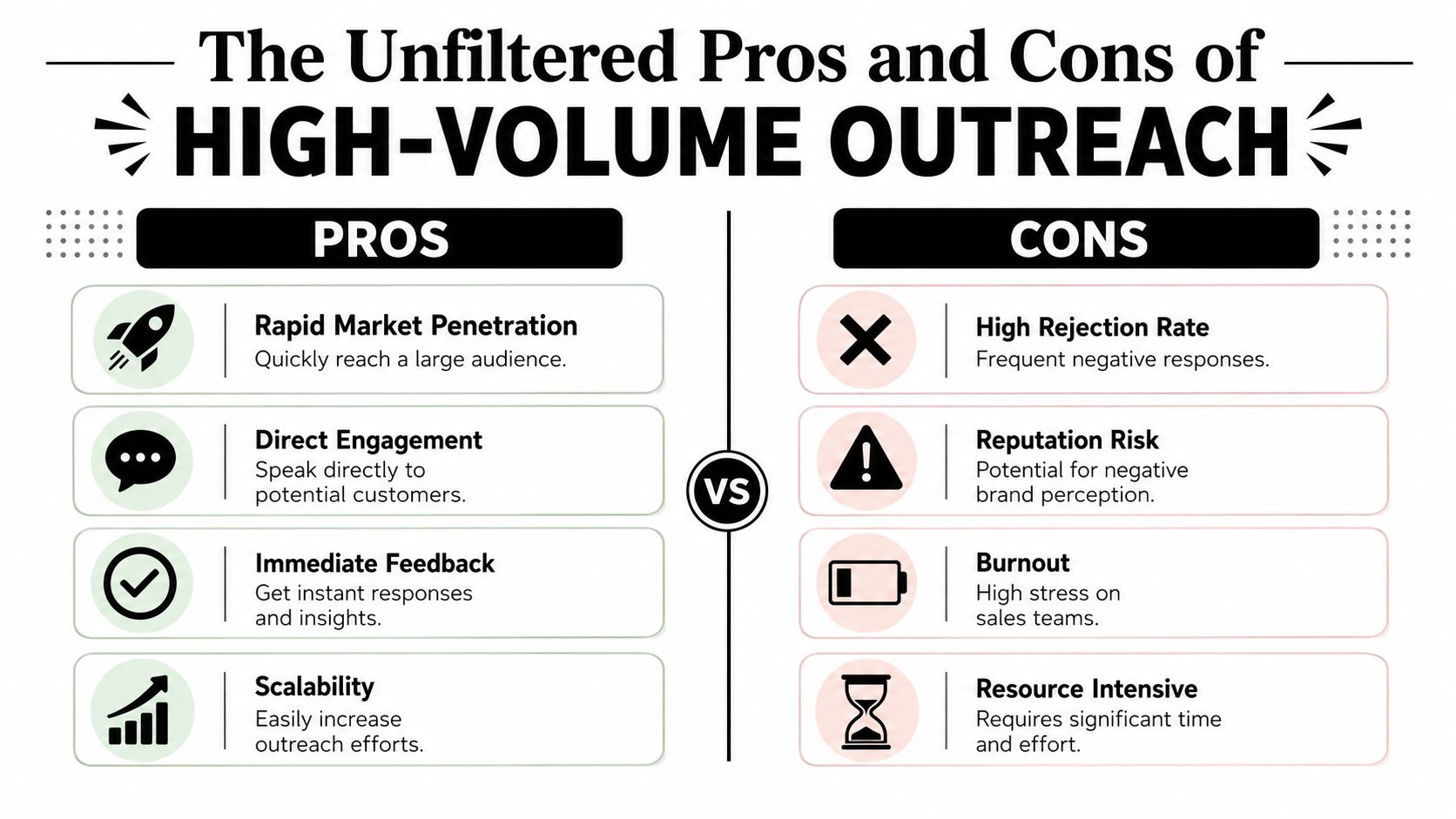
A high-activity calling motion is useful when speed matters more than depth in the first touch.
- Fast market feedback: Reps learn quickly which messaging gets curiosity, confusion, or resistance.
- Simple operating model: Teams can ramp around clear workflows without waiting on elaborate campaign design.
- Direct signal from the market: A live conversation exposes objections faster than a dashboard full of opens and clicks.
- Coverage across a large book: If the segment is broad and transactional, calling can still create enough surface area to find demand.
For teams deciding where outbound belongs in the sales mix, this guide on inbound vs outbound sales explained is a useful framing tool because it separates channel mechanics from sales strategy.
Where the model breaks
The biggest problem isn't rep morale. It's access. With high volumes of spam calls, carriers and regulators now rely on caller authentication and aggressive filtering, which means the first challenge is whether the call gets through at all, as noted in this Smile and Dial overview. That shifts the bottleneck away from rep enthusiasm and toward data quality, dialing hygiene, and trust signals.
If a call is flagged, ignored, or blocked, the rep's tone never enters the equation.
That creates several practical downsides:
- Burnout risk: Rejection-heavy workflows wear down even capable reps if leadership only measures volume.
- Brand damage: Aggressive dialing into poorly matched accounts teaches the market to ignore you.
- Compliance exposure: The sloppier the list and process, the greater the operational risk.
- Waste: Teams burn time calling contacts who were never viable in the first place.
A related issue shows up outside calling too. Weak data tends to cascade across channels. If your team is also seeing delivery problems in outbound email, it's worth tightening list hygiene and reviewing ways to improve email deliverability so your multichannel motion doesn't fail in parallel.
A simple decision test
Use high-volume outreach when these conditions are true:
- The segment is reachable: You can identify the right roles quickly.
- The offer is easy to explain: The problem and value proposition are clear in one short conversation.
- The follow-up path is tight: Calls lead somewhere concrete, not into vague “just checking in” cycles.
Avoid a pure volume model when the sale needs education, multi-threading, and patience. In those cases, the phone still matters. It just can't carry the whole pipeline alone.
A Modern Smile and Dial Playbook
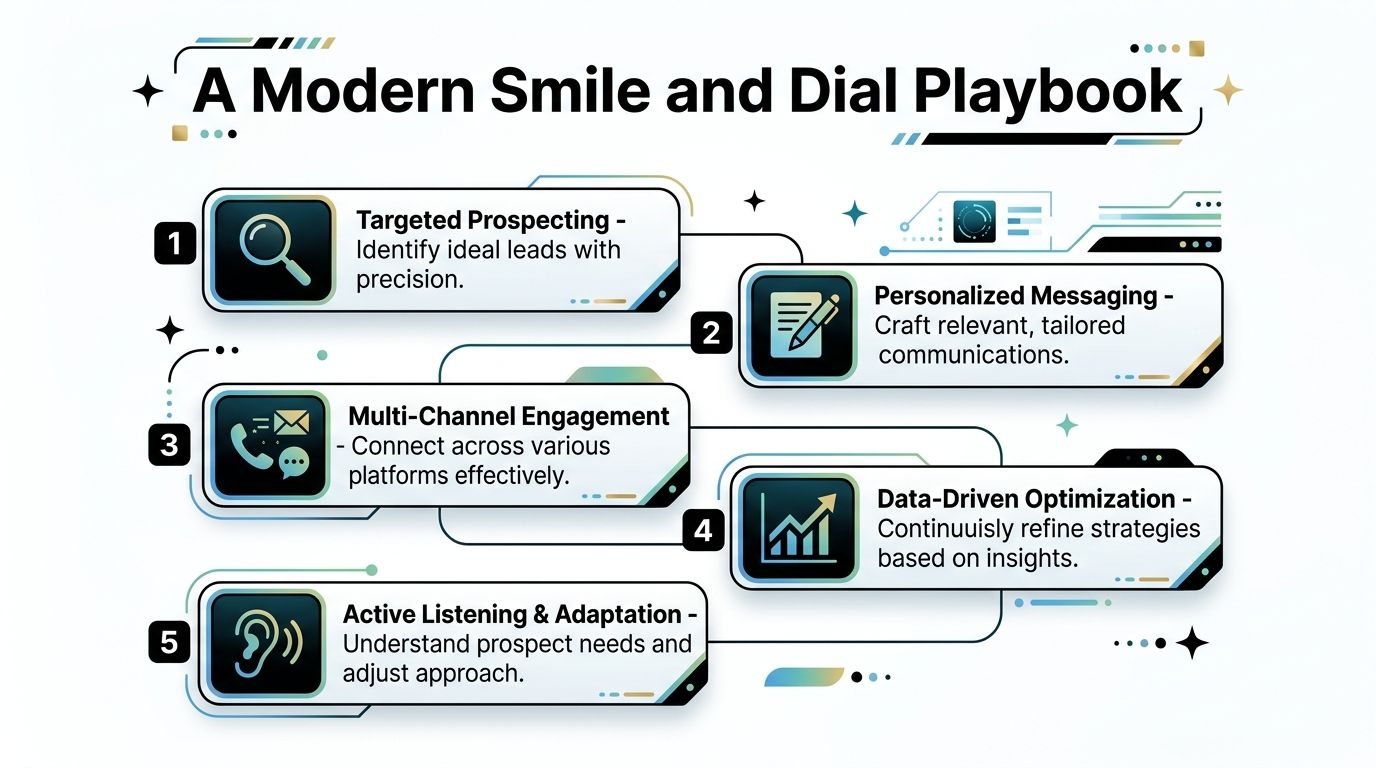
The modern version starts with a blunt truth. More dials don't fix poor fit. Before the first call block begins, the team should know which accounts deserve high-volume treatment and which ones need a slower, account-based motion.
Start with segments, not slogans
Smile and Dial works best where urgency is real, the pain is legible, and one or two contacts can drive a next step. That usually points to high-velocity SMB sales, straightforward service offers, or tightly defined use cases.
If the sale gets political inside the account, change the playbook. Don't ask reps to brute-force enterprise complexity with the same motion they use for smaller deals.
A working segmentation filter looks like this:
| Segment trait | High-volume phone first | Multithreaded outbound first |
|---|---|---|
| Buying path | Short and clear | Layered and cross-functional |
| Decision ownership | Concentrated | Distributed |
| Message complexity | Easy to grasp fast | Needs education and proof |
| Best first move | Call-led outreach | Account-led orchestration |
Build a cadence that earns context
Phone-only outreach is usually too thin now. The call works better when it sits inside a cadence with supporting touches. That doesn't mean building something bloated. It means giving the prospect enough context that the call feels timely instead of random.
A practical cadence usually includes:
- A focused first call aimed at relevance, not a full pitch.
- A follow-up email that mirrors the problem statement in plain language.
- A second call that references the prior touch instead of pretending there was no history.
- A social or profile-based touch when it adds real context.
- A clean handoff or exit so reps don't recycle dead leads forever.
Teams building this motion often benefit from dedicated B2B sales prospecting tools because sequencing, enrichment, and prioritization all affect whether the rep sounds prepared or generic.
Field note: The best call openers are usually built from a small amount of specific context, not from elaborate personalization.
Use scripts as guardrails, not handcuffs
Rigid scripts make reps sound artificial. No script makes them ramble. The middle ground is a talk track framework.
Good frameworks include:
- An opener: Why this account, why this role, why now.
- A problem lens: One or two likely friction points.
- A branching path: Questions that adapt based on the answer.
- A clear ask: A next step that matches the size of the conversation.
The rep should never sound like they memorized a speech. They should sound like they know where the conversation is going.
Measure conversations, not just effort
Old-school teams worship dial counts. Modern teams still track activity, but they manage toward quality checkpoints.
Use metrics like:
- Meaningful conversations: Calls where the rep reached a relevant contact and learned something useful.
- Meetings booked: Not every live conversation deserves calendar time.
- Positive progression: Follow-up agreed, referral provided, or stakeholder identified.
- List decay indicators: Signs that the contact pool is getting stale or misaligned.
That last one matters more than most managers admit. If one rep keeps missing while another gets traction, the issue might not be skill. It may be coverage quality, contact selection, or data freshness.
How Data Transforms Dialing into Dollars
The fastest way to ruin Smile and Dial is to hand a good rep a bad list. Everything breaks from there. Wrong contact, wrong company, outdated role, stale number, weak context. Leadership often labels that a performance problem when it's really an input problem.
Bad lists break good reps
When a rep spends the first hour of a call block second-guessing titles, correcting company names, and skipping records that don't look trustworthy, the team isn't running outbound. It's running data cleanup disguised as prospecting.
Strong data improves dialing in three ways:
- Selection: The rep starts with accounts that match the offer.
- Contact accuracy: The person being called is relevant to the problem.
- Workflow confidence: Reps stop hesitating because the record looks usable.
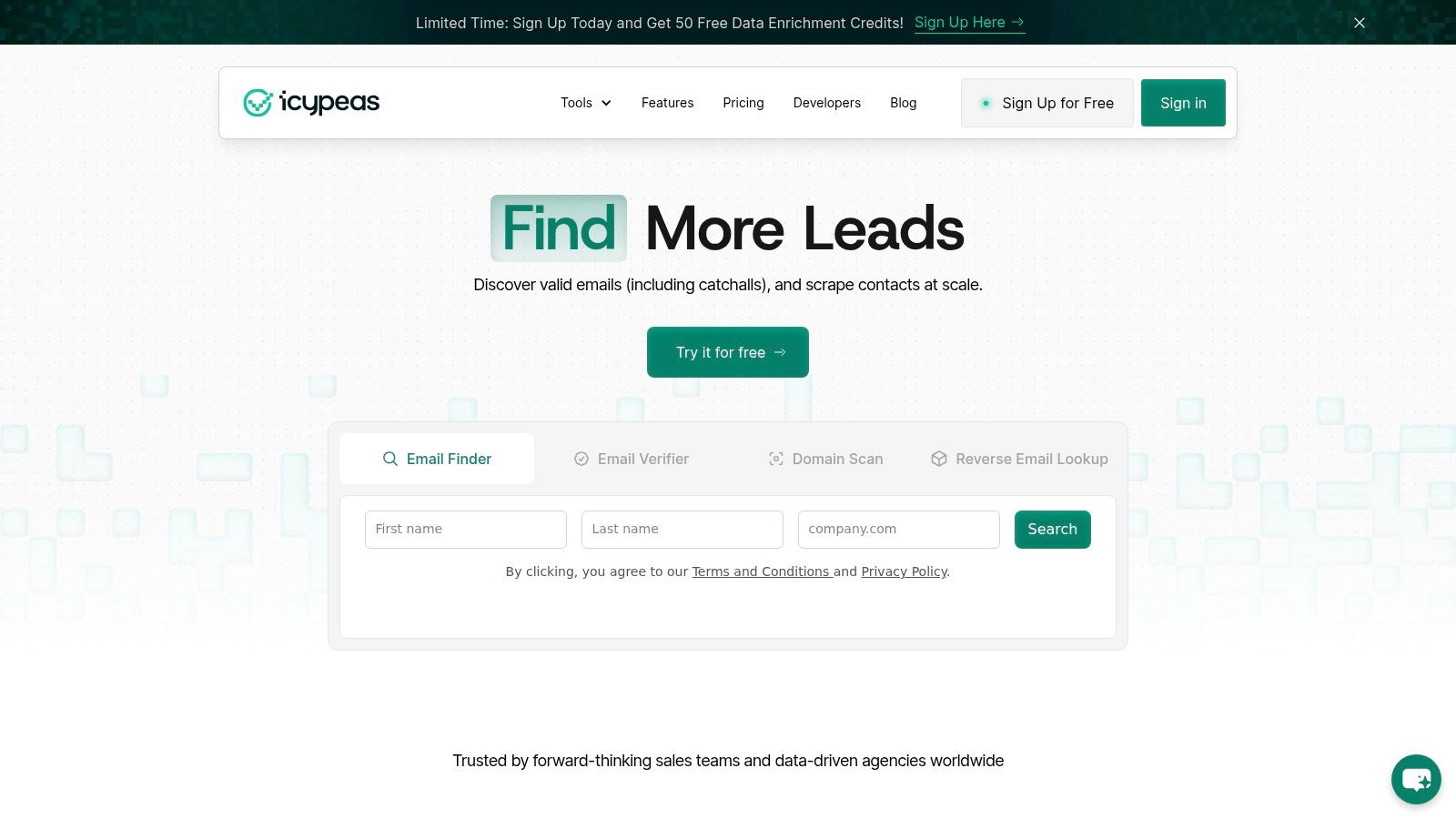
Enrichment tooling is key. A platform like Icypeas can be used to find, verify, and enrich B2B contact data so reps can build cleaner calling lists, add role and company context, and reduce wasted outreach. For teams comparing options, this overview of B2B data enrichment tools is a practical place to evaluate how enrichment fits into outbound operations.
Enrichment turns calls into relevant outreach
The difference between a generic opener and a credible one is usually a small amount of accurate context. A title. A company detail. A reason that role would care. That's what enrichment gives the rep.
Instead of opening with a broad product statement, the rep can anchor the call around a plausible business issue tied to the contact's function. That doesn't require a long custom brief for every account. It requires enough reliable detail to avoid sounding interchangeable.
Better data doesn't make a rep charismatic. It makes the call relevant before charisma is needed.
A people enrichment workflow is especially useful when you need to identify the likely owner of a problem inside the account, not just any visible contact. It also helps when reps need to pivot after learning that the first person reached isn't the right one.
Verification protects the motion
Verification is the less glamorous side of outbound, but it saves teams from avoidable waste. Clean records support cleaner sequencing, stronger CRM hygiene, and more reliable prioritization across phone and email.
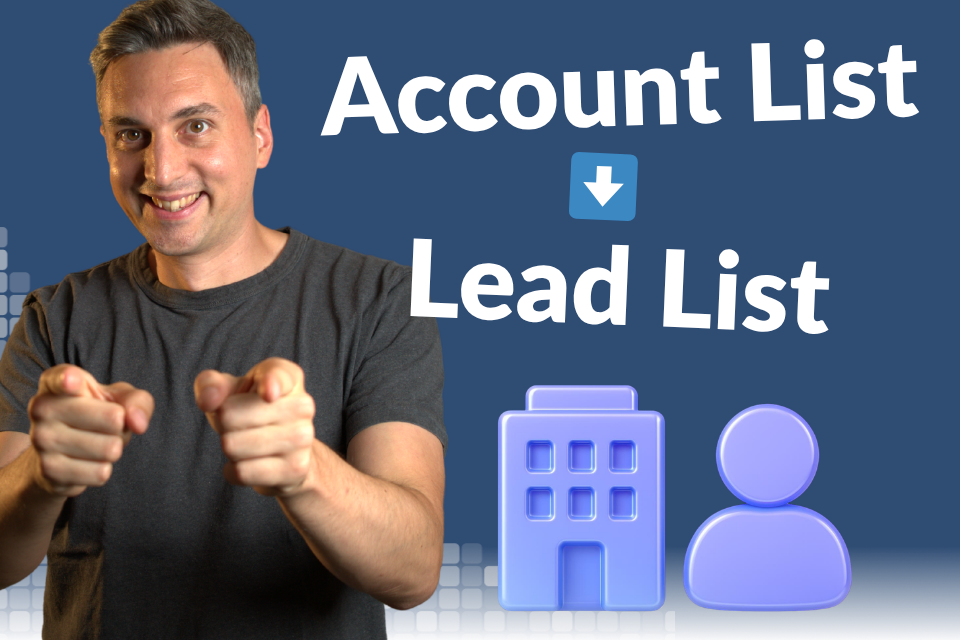
This walkthrough is worth watching if you're thinking about how lead data supports the broader workflow, not just list building:
The broad lesson is simple. Modern Smile and Dial performs like a data operation first and a calling exercise second. If the inputs are weak, the rep carries unnecessary friction into every conversation. If the inputs are clean, the team can focus on timing, talk tracks, and follow-through.
The Final Verdict on Smiling and Dialing
Smile and Dial isn't dead. The lazy version is.
The tactic still works when sales leaders stop treating it like a motivational slogan and start treating it like a precision workflow. The smile is composure, preparation, and a voice that sounds worth listening to. The dial is targeted outreach, supported by clean data and a cadence that makes the call feel connected to something real.
A modern version of the playbook is straightforward:
- Choose the right segment: High-volume calling fits some markets and hurts others.
- Use phone inside a sequence: Calls land better when other touches create context.
- Coach to frameworks, not scripts: Reps need structure without sounding robotic.
- Track signal, not vanity: Meaningful conversations matter more than blind activity.
- Fix the data first: If the list is weak, the motion will stay weak.
That's the practical update for 2026. Teams don't win because they smile harder. They win because they call the right people, with the right context, through a system that gives the rep a fair chance to start a real conversation.
If your team wants to modernize Smile and Dial, start with the contact layer. Icypeas helps sales and ops teams find, verify, and enrich B2B contact data so reps spend less time dialing bad records and more time speaking with relevant buyers.


















































.png)



.webp)