.avif)
AI Driven Personalization: A Guide for B2B Teams in 2026

.avif)
Your team already knows the pain. You build a sequence, clean the copy, tweak the subject lines, and still get the same pattern: weak replies, generic objections, and too many prospects who never should've been in the campaign in the first place. The problem usually isn't effort. It's that most B2B outreach still treats contacts like segments instead of specific people inside specific companies with specific buying contexts.
That's where AI driven personalization changes the operating model. It's not just about swapping in a first name or referencing an industry. It's about using data, signals, and enrichment to decide what message should go to which account, through which channel, and with what level of specificity. The market scale shows this isn't a niche experiment. The global AI-based personalization market is estimated at USD 299.84 billion in 2025 and projected to reach USD 342.54 billion in 2026 according to 360iResearch's AI-based personalization market analysis.
Table of Contents
Beyond the Generic Email Blast
The generic email blast usually fails long before the message lands in an inbox. The list is too broad. The company data is stale. The job titles are imprecise. Someone in marketing writes one value proposition and expects it to work for an operations lead, a founder, and a sales manager at three very different companies.
That's why advice about copywriting alone only gets you part of the way. Good writing matters, and teams should still learn the mechanics of relevance, structure, and clarity. A practical starting point is this guide on how to write the best cold email. But better copy can't rescue poor targeting or weak contact intelligence.
AI driven personalization matters because it changes the unit of work. Instead of “send one campaign to one segment,” the workflow becomes “assemble the right message for this account and this contact based on current evidence.” That evidence can include role, company profile, buying context, product fit, and recent behavior across your owned channels.
Generic outreach wastes more than send volume. It burns trust with buyers who can tell when your team doesn't understand their business.
In B2B, that trust penalty is expensive. Deliverability drops when lists are inaccurate. Replies fall when the message doesn't match the role. Meetings don't convert when the initial premise was built on a bad assumption. AI doesn't fix sloppy go-to-market work. It makes disciplined go-to-market work scalable.
Unpacking AI Driven Personalization
Many organizations say they're doing personalization when they're really doing segmentation. Those aren't the same thing.
What it is not
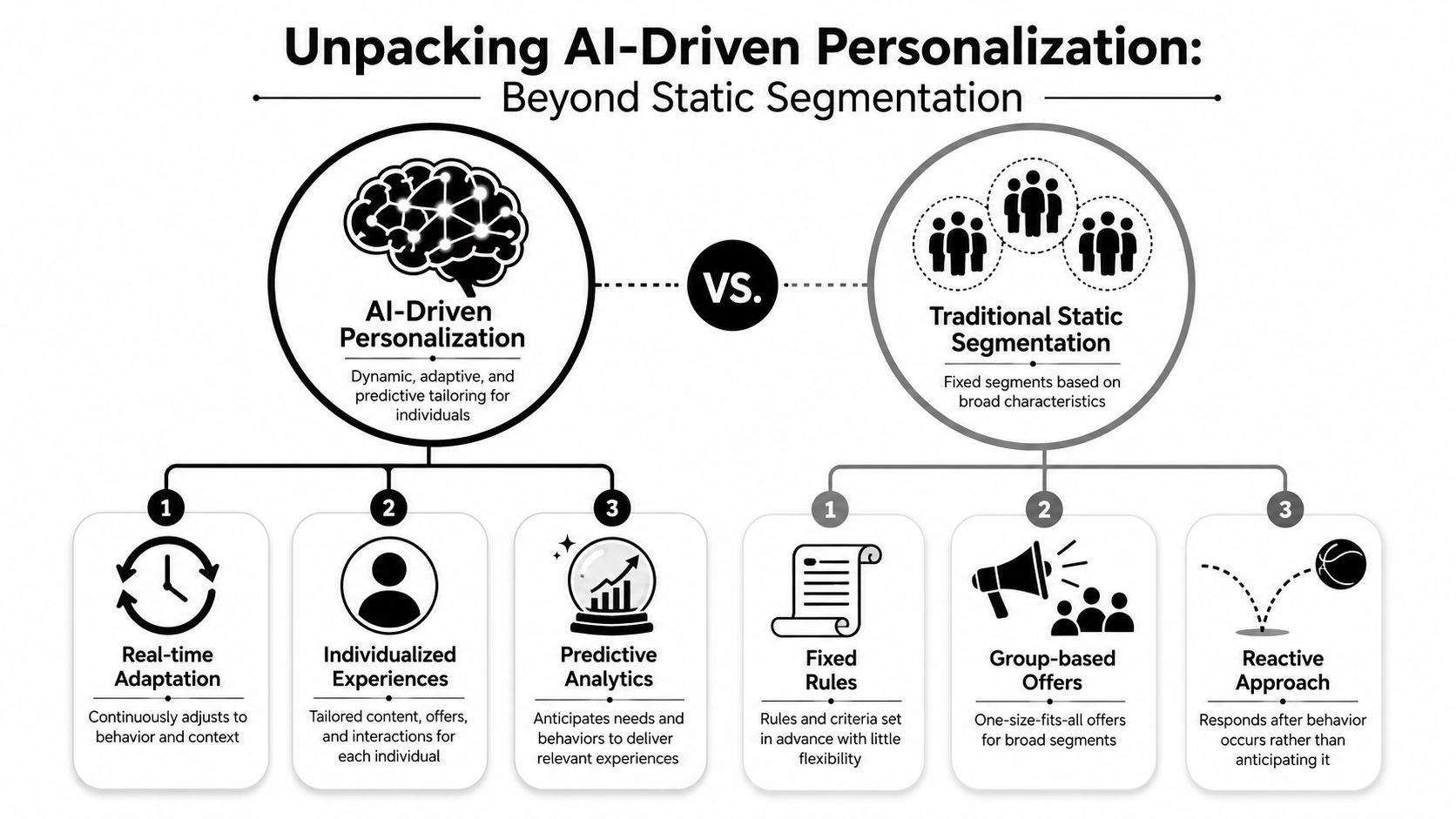
Traditional segmentation is off-the-rack clothing. You sort people into broad sizes and hope the fit is good enough. You build a “VP Sales at mid-market SaaS” segment, attach a few rules, and send everyone in that bucket the same message.
That approach still has value for campaign planning. It just isn't AI driven personalization.
What makes it different
AI driven personalization is bespoke tailoring. The system doesn't rely on a handful of broad attributes. It assembles a profile from many signals, updates that profile as new information appears, and helps decide the next best message, offer, or action for that specific contact or account.
A simple comparison makes the difference clearer:
| Approach | Logic | Data use | Output |
|---|---|---|---|
| Static segmentation | Fixed rules | Limited fields, updated occasionally | Same message for a broad group |
| AI driven personalization | Adaptive models and scoring | Multi-signal profiles that change over time | Individualized messaging and timing |
In practice, that means a B2B team can change more than surface-level copy. It can adjust:
- Message angle based on role, industry, and business model
- Proof points based on company maturity, geography, or stack
- Timing based on engagement patterns and sales stage
- Channel mix based on whether a contact responds to email, ads, product prompts, or SDR outreach
Practical rule: If your “personalization” only swaps tokens into a template, you're still in the rules era.
The most useful mental model is this: AI personalization doesn't replace strategy. It operationalizes strategy at a level of granularity humans can't manage manually. A marketer can define which accounts matter, which offers fit, and which signals indicate readiness. The system can then help tailor execution contact by contact.
That's also why B2B teams should be careful with definitions. A lot of software claims personalization when it only offers dynamic fields or simple branching. Real AI driven personalization adapts based on changing evidence. It's not just mail merge with better branding.
The Technology Behind the Magic
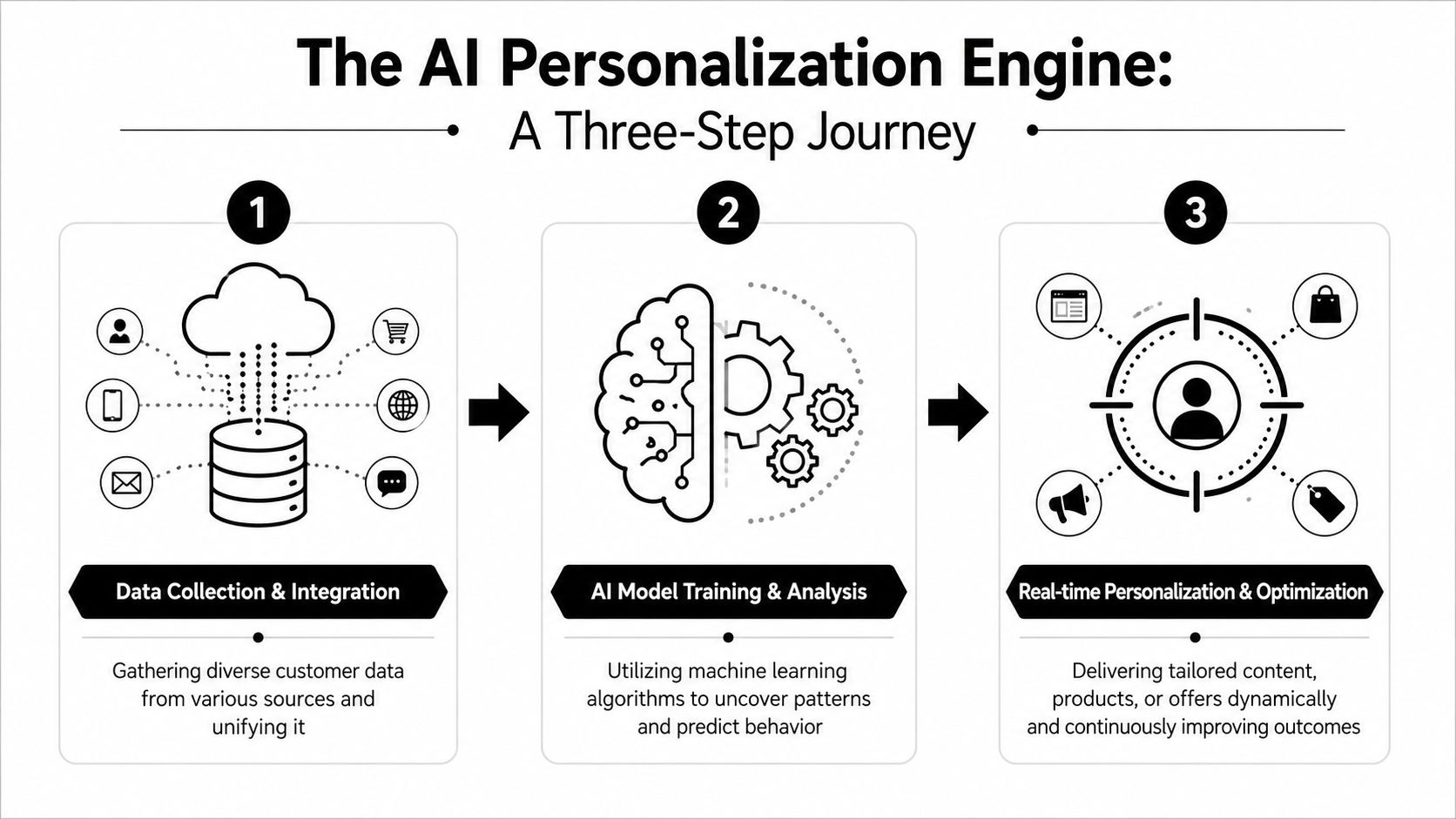
Under the hood, most personalization systems follow a straightforward pattern. Collect usable data. Turn that data into features the model can use. Then deliver decisions where revenue teams work.
A strong visual makes the sequence easier to grasp:
The input layer
The raw materials are usually three data categories: behavioral, transactional, and contextual. Behavioral data includes things like page views, clicks, searches, and time on page. Transactional data includes purchases, cart additions, returns, or wishlist activity. Contextual data adds the setting, such as device type, location, time of day, or referral source.
What matters is unification. According to Pedowitz Group's explanation of data needed for effective AI personalization, effective systems unify those categories through identity resolution, often using keys like customer ID or hashed email. The same source states that well-implemented systems using this multi-modal integration achieve 15–30% conversion rate lifts compared to control groups.
For teams working across sales and product systems, the data plumbing matters as much as the model. If your CRM, website analytics, lifecycle platform, and enrichment layer don't agree on who a contact is, the personalization logic breaks fast. That's one reason many teams start by defining how their systems exchange data through a data API workflow.
The decision layer
Once the data is unified, the next step is turning it into useful model inputs. Operators don't need to become machine learning engineers, but they do need to understand what the model is looking for.
Useful features in B2B often include combinations such as:
- Role plus company type because the same title means different things at different firms
- Recent engagement plus account stage because not every click indicates buying intent
- Product fit plus contact validity because a relevant message still fails if the record is wrong
Many teams often oversimplify. They assume more data automatically means better personalization. It doesn't. Bad fields, duplicate records, and mismatched identities often create confident but wrong recommendations.
Later in the evaluation process, it helps to see how these systems are explained visually and conceptually:
The delivery layer
The final step is decisioning and activation. The model may score which content block to show on a site, which SDR sequence fits an account, or which offer belongs in a nurture flow. But if your execution layer can't act on those signals in real time, the insight stays trapped in a dashboard.
The practical test is simple. Can the output change what the buyer sees, what the rep sends, or what the system suppresses? If the answer is no, it's reporting, not personalization.
Actionable B2B Use Cases and Benefits
The easiest way to judge AI driven personalization is to look at how different operators use it in daily work. Not theory. Actual workflow decisions.
For SDR teams
An SDR starts the morning with a territory list. Without personalization, the sequence is mostly fixed and the “customization” happens in the first line. With AI support, the rep can prioritize accounts by fit, identify likely buying triggers, and tailor the angle based on role and company context.
That changes the outreach from “We help companies like yours” to something tighter. The message can reflect hiring signals, technology environment, GTM motion, or whether the contact sits in a function that owns the problem. Teams exploring this direction often study how autonomous AI sales agents are being used to support research, prioritization, and sequence execution.
A useful pattern is selective depth. Don't personalize every sentence. Personalize the parts that establish relevance:
- Problem framing tied to the prospect's function
- Evidence tied to company context
- CTA tied to likely buying stage
For marketing teams
A marketer sees a different challenge. The goal isn't one email. It's orchestration across site, ads, email, and nurture.
A practical setup might use firmographic and account-level context to alter homepage messaging for returning visitors from target accounts. The same logic can shape lead nurture content. A prospect from a large multi-product company shouldn't get the same journey as a founder at an early-stage SaaS firm, even if both downloaded the same asset.
The strongest personalization programs don't just choose what to show. They choose what to withhold because the wrong message at the wrong moment creates friction.
For RevOps teams
RevOps sits in the middle of the mess. This team has to decide which fields are trusted, which systems are authoritative, and which triggers should move a lead or account into a different path.
Three benefits usually stand out when RevOps gets the model right:
| Team | Personalization lever | Business effect |
|---|---|---|
| SDR | Better account and contact context | Higher quality conversations |
| Marketing | Dynamic content and journey logic | More relevant engagement |
| RevOps | Cleaner routing and orchestration | Less operational waste |
The hidden benefit is consistency. When sales and marketing personalize from the same account understanding, buyers stop receiving mismatched messages from different teams.
Your Roadmap to Implementation
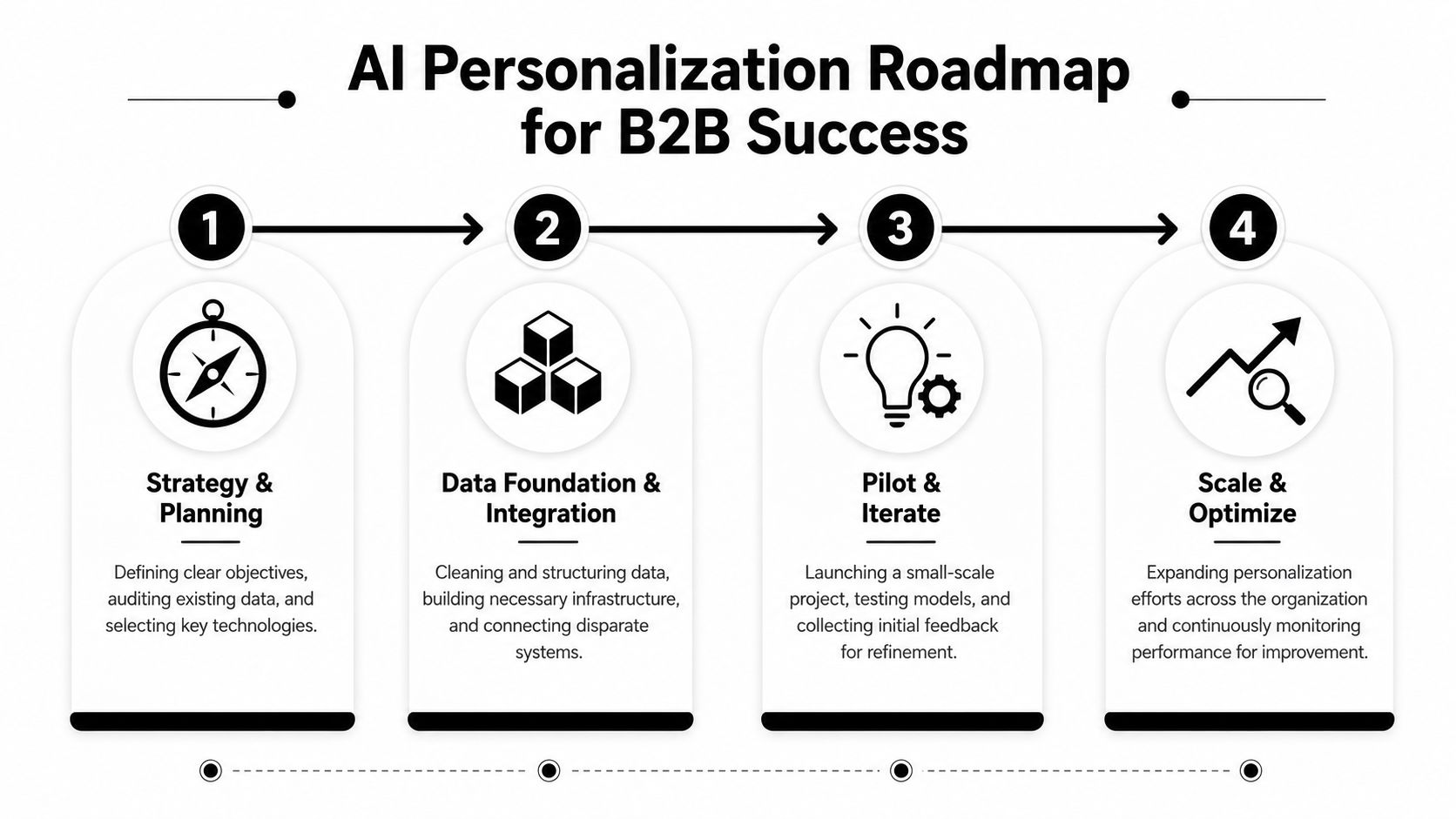
A lot of AI personalization projects fail because teams begin with tooling instead of a commercial problem. They buy a platform, connect a few fields, and hope the model will discover value on its own.
Start with one commercial problem
Pick one revenue outcome that matters and one workflow where personalization can change that outcome. Good candidates include outbound reply quality, inbound lead routing, website conversion for target accounts, or nurture progression for a specific segment.
Then audit your current state.
Find the data gaps
Look at what your CRM, product analytics, marketing automation, and enrichment systems contain. Separate fields that are populated from fields that are trusted. Those are not the same thing.Define the decision you want the system to make
Should it select message angle, suppress low-fit contacts, choose content, or prioritize accounts? If the decision isn't clear, the model won't be either.Set the human review points
B2B teams need operator oversight, especially early. Decide where SDR managers, marketing ops, or RevOps leaders approve logic before it runs widely.
Build the system before you scale the messaging
After strategy, the next move is infrastructure. Implementing this requires a combination of CRM hygiene, identity resolution, content logic, and activation channels that can react to model outputs.
A simple rollout often works better than a grand redesign:
- Pilot one use case in one channel with one audience
- Review failures manually to see whether the issue is data, logic, or message quality
- Expand only after orchestration works across systems, not just in a standalone tool
Don't scale a personalization layer on top of broken account data. You'll only produce more tailored mistakes.
One implementation choice matters more than teams expect: suppression logic. Good systems decide when not to send, not to score, or not to personalize because the confidence level is too low. That protects deliverability and keeps noisy signals from contaminating downstream campaigns.
The teams that make steady progress treat AI personalization like RevOps infrastructure, not creative garnish. They document field ownership, retraining rules, fallback messaging, and exception handling. That discipline is what turns a pilot into a dependable operating layer.
The Critical Role of Data Enrichment
Data quality is the hard floor for AI driven personalization. If the record is wrong, the message is wrong. If the contact is unverified, the deliverability risk rises. If the company profile is incomplete, the model has to fill gaps with guesses.
Why inferred data breaks in B2B
A lot of personalization software leans heavily on inferred behavior. Someone visited a pricing page. Someone clicked a resource. Someone spent time on a product screen. Those signals are useful, but they're not enough for high-stakes B2B outreach where role accuracy, company fit, and compliance matter.
The more important distinction is declared versus inferred data. In B2B, declared preferences and verified identity data often carry more weight because they're more defensible. A 2024 review highlighted that in B2B settings, where trust and GDPR/CCPA compliance are central, inferred data often leads to inaccurate profiling and that shifting toward declared personalization creates a more respectful and accurate foundation, as described in this analysis of the personalization paradox and the creepiness threshold.
That fits what operators see every day. Inferred signals can tell you someone may be interested. They can't reliably tell you whether the contact is still at the company, whether that person owns the budget, or whether the account belongs in your market at all.
What better data looks like
Better B2B personalization starts with a richer record. That usually means combining:
- Verified contact data so your team sends to reachable people
- Firmographic context such as company size, industry, and business model
- Role clarity so your angle matches actual responsibility
- Declared preferences when buyers have explicitly shared interests or communication choices
Here, enrichment becomes operational, not cosmetic. A platform such as Icypeas marketing data enrichment can be part of that stack by helping teams find, verify, and enrich professional records before they trigger outreach or routing logic.
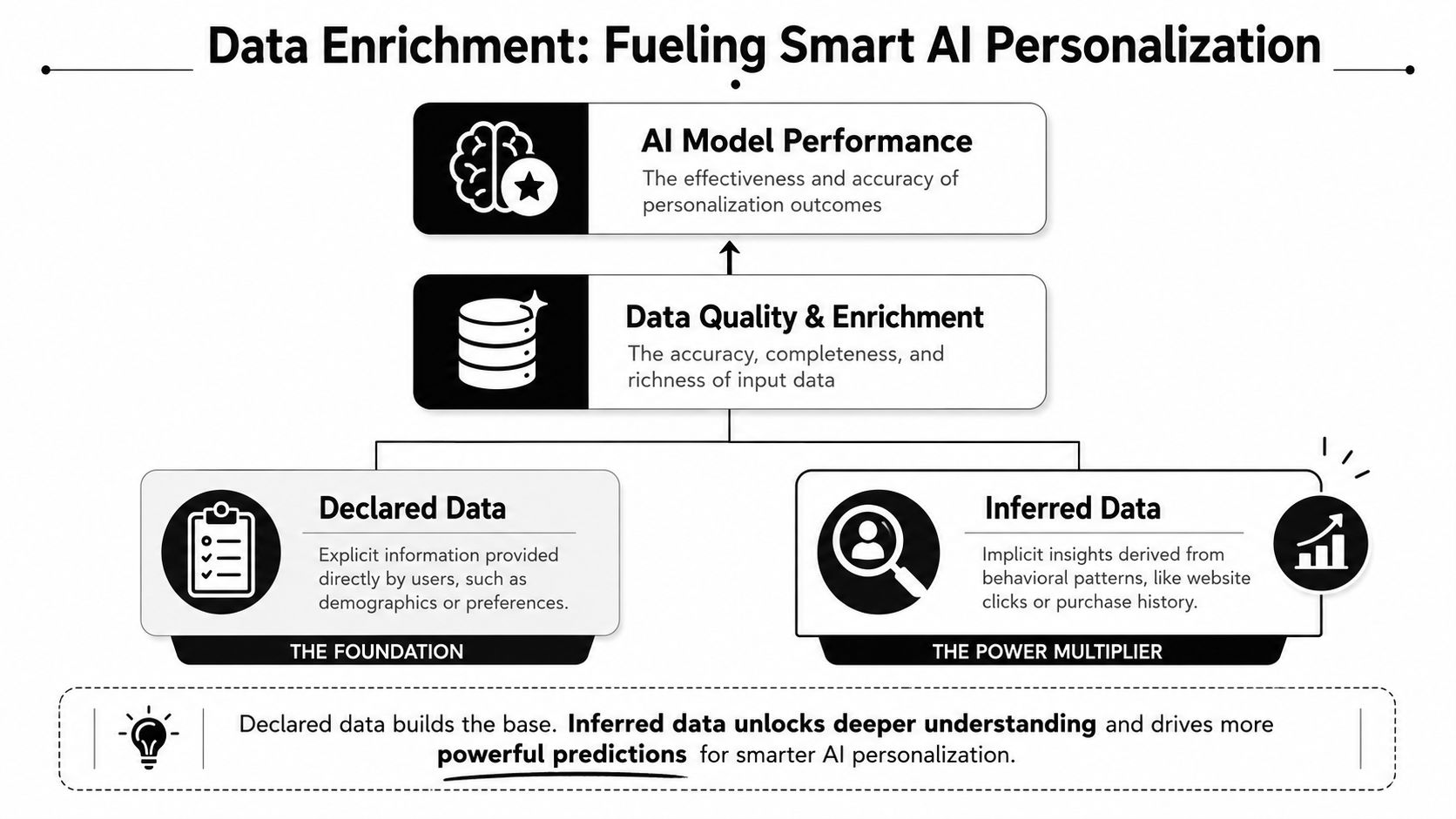
The key point isn't that inferred data is useless. It isn't. The point is that inferred data performs better when it sits on top of a verified identity and company layer. In B2B, accuracy is part of personalization. A message can sound highly relevant and still fail if it reaches the wrong person, at the wrong company, with the wrong assumptions.
Navigating Challenges and Future Trends
The main challenge with AI driven personalization isn't technical novelty. It's restraint. Teams can collect more signals than they can use responsibly, and buyers notice when personalization crosses from helpful to invasive.
The line between relevance and intrusion
There's a practical limit to how much inferred knowledge a message should reveal. If a prospect feels watched rather than understood, trust drops. Research discussed in this 2024 study summary on AI-driven personalization, trust, and privacy concerns points to that tension. Personalization can increase trust and perceived usefulness, but privacy concerns can erase those gains, and stronger engagement doesn't automatically follow.
That's why mature teams need suppression rules, fatigue awareness, and cross-channel coordination. Sometimes the best personalization decision is to simplify the message, lower the frequency, or avoid using a sensitive signal even if the system detected it.
Where the market is heading
The future direction is toward more granular execution, not less. The hyper-personalization market is valued at USD 13.9 billion in 2025 and projected to reach USD 15.46 billion in 2026, with a projected 39.56% CAGR during 2025 to 2035, according to Business Research Insights' hyper-personalization market report.
That projection matters, but the bigger takeaway is operational. B2B teams will keep moving toward systems that personalize at the account, buying-group, and individual level. The winners won't be the teams with the most aggressive inference models. They'll be the teams that combine verified data, clear consent boundaries, and disciplined orchestration.
If your team wants AI personalization that improves deliverability instead of risking it, start with the data layer. Icypeas helps B2B teams find, verify, and enrich professional contact data so sales, marketing, and RevOps can personalize from accurate records rather than guesswork.



























.png)


.webp)